Udawalawe vs Yala Safari: Which Sri Lankan Park is Right for You?

Choosing between Udawalawe and Yala National Parks represents one of the most important decisions for travelers planning Sri Lankan wildlife safaris. Both parks rank among the island's premier wildlife destinations, each offering exceptional safari experiences that showcase Sri Lanka's remarkable biodiversity and conservation success. However, these two parks differ significantly in character, wildlife viewing experiences, visitor management, accessibility, and overall safari atmosphere—differences that dramatically affect which park best suits your specific travel priorities, interests, and expectations. Udawalawe National Park has earned its reputation as the most reliable destination in Asia for guaranteed elephant encounters, with 500-600 resident elephants virtually ensuring spectacular sightings regardless of season or timing. The park's open grassland terrain, year-round consistency, and manageable tourist numbers create predictable, comfortable safari experiences ideal for families, first-time safari visitors, and anyone prioritizing elephant viewing above all else. Yala National Park, conversely, stands as Sri Lanka's most famous wildlife destination, renowned for hosting the world's highest density of leopards alongside exceptional overall species diversity including elephants, sloth bears, crocodiles, and over 200 bird species. Yala's varied habitats, dramatic landscapes, and the thrilling possibility (though not guarantee) of leopard encounters create more adventurous, unpredictable safaris appealing to experienced wildlife enthusiasts and those seeking diverse animal viewing. This comprehensive comparison explores every relevant dimension differentiating these two outstanding parks—from wildlife populations and viewing reliability to crowding concerns, seasonal considerations, costs, accessibility, and accommodation options. We'll help you understand what each park offers, which better aligns with your priorities, whether visiting both makes sense, and how to make informed decisions ensuring your Sri Lankan safari investment delivers the experiences you're hoping for.
Park Overview and Geography
Udawalawe National Park
Location and size: Udawalawe National Park encompasses 30,821 hectares (308 square kilometers) in Sri Lanka's southern lowlands, approximately 165 kilometers southeast of Colombo. The park straddles the boundary between Sabaragamuwa and Uva provinces, positioned strategically between south coast beaches and hill country destinations.
Landscape characteristics: Open grassland plains dominate the park, creating savanna-like appearance reminiscent of African wildlife reserves. The massive Udawalawe Reservoir forms the park's centerpiece, surrounded by extensive grasslands, scattered scrubland, and forest patches along the periphery. This relatively simple, open topography provides excellent wildlife visibility with minimal vegetation obstruction.
Establishment history: Created in 1972 to protect the catchment area surrounding the newly-constructed Udawalawe Reservoir and provide refuge for elephants displaced by the reservoir's construction, the park has successfully evolved into one of Sri Lanka's most important elephant sanctuaries. The man-made reservoir fundamentally shaped the park's character, creating permanent water sources that anchor resident wildlife populations.

Climate: Udawalawe experiences dry zone climate with distinct wet (October-April) and dry (May-September) seasons, though the permanent reservoir ensures water availability year-round. Temperatures remain consistently warm (27-35°C / 81-95°F) throughout the year with minimal seasonal variation.
Accessibility: Good road access via the Southern Expressway makes Udawalawe relatively easy to reach from Colombo (3-4 hours) and integrates naturally into itineraries combining south coast beaches with wildlife viewing. The park's compact size allows comprehensive exploration during standard half-day safaris.
Yala National Park
Location and size: Yala National Park covers approximately 97,881 hectares (979 square kilometers) making it substantially larger than Udawalawe, though only a portion (Block 1, approximately 14,101 hectares) is open to tourist safaris. Located in southeastern Sri Lanka, Yala sits roughly 240 kilometers from Colombo in the island's dry zone.
Landscape diversity: Yala features dramatically varied topography including scrub jungle, grasslands, forests, wetlands, lagoons, beaches, and rocky outcrops creating diverse habitats supporting exceptional species diversity. This landscape complexity contrasts sharply with Udawalawe's relatively uniform grasslands, providing more visually dramatic but also more challenging wildlife viewing conditions.
Establishment history: Yala became a wildlife sanctuary in 1900 and achieved National Park status in 1938, making it one of Sri Lanka's oldest protected areas with a century-plus conservation legacy. This long protection history has allowed wildlife populations to flourish and habitats to mature into complex ecosystems.
Climate: Similar dry zone climate to Udawalawe with slightly more seasonal rainfall variation. The park's larger size creates microclimatic differences across different sections, with coastal areas receiving different rainfall patterns than interior zones.
Accessibility: Yala sits further from Colombo (5-6 hours driving) making it less convenient for short trips but positioning it well for itineraries combining with south coast beaches (particularly Mirissa and Tangalle areas, 1.5-3 hours away). The larger park size means safari routes cover more ground potentially requiring longer safari durations.

Wildlife Comparison
Elephants
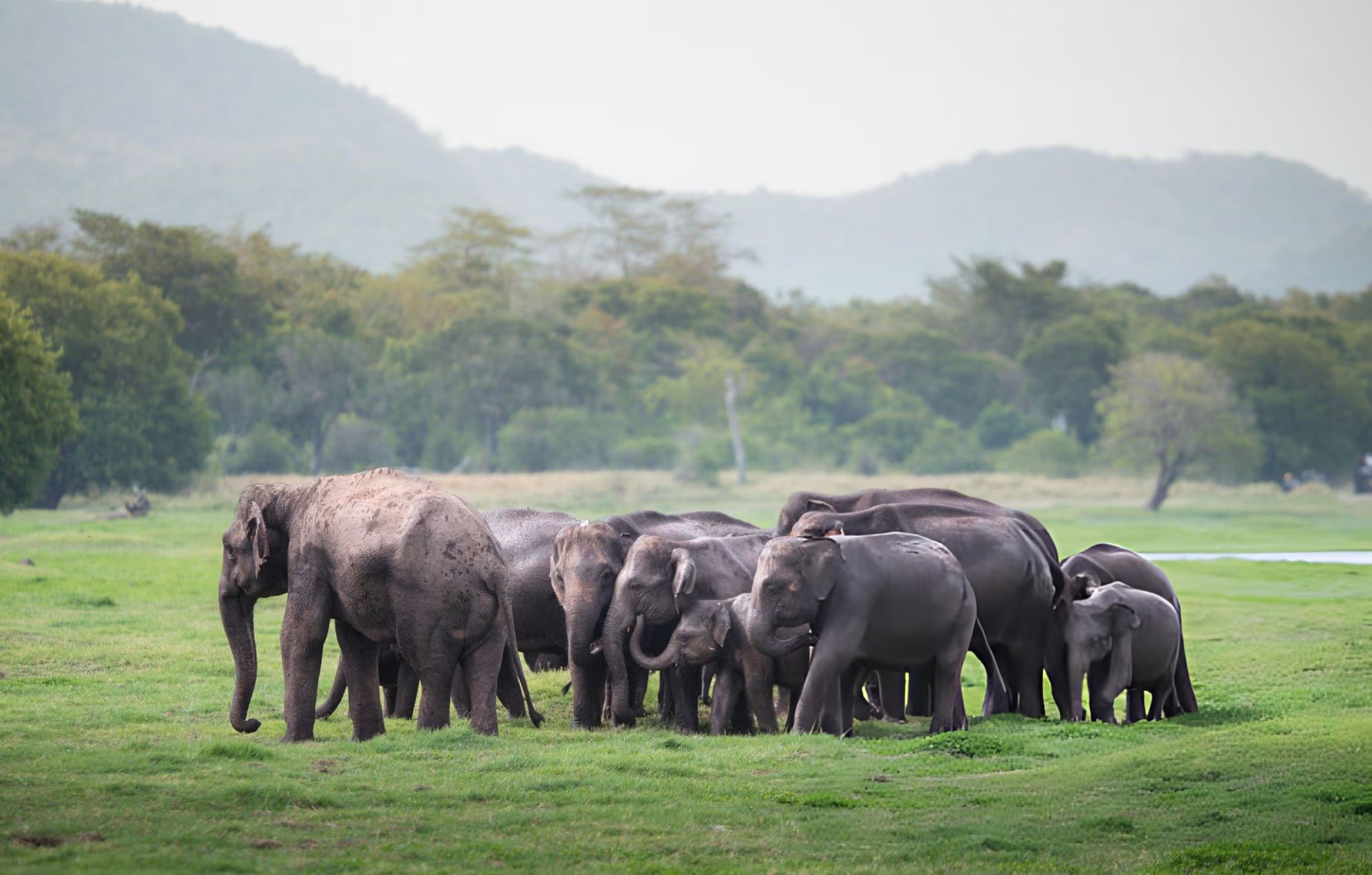
Udawalawe elephant population: 500-600 resident elephants living permanently within park boundaries, creating the highest concentration and most reliable elephant viewing in Sri Lanka. Virtually every safari encounters multiple elephant herds with sightings of 30-100+ individuals during standard half-day excursions. The open terrain allows easy spotting and unobstructed viewing of elephants at comfortable distances.
Yala elephant population: Substantial elephant population (estimates vary but several hundred individuals) distributed across the much larger park area. While elephant sightings occur frequently at Yala, they're less concentrated and guaranteed than Udawalawe. Visitors might observe 5-30 elephants during safaris with high variability between excellent and mediocre sightings. The denser vegetation sometimes obscures elephants, making them harder to spot despite being present.
Viewing reliability: Udawalawe provides near-100% elephant sighting reliability regardless of season, time of day, or luck. Yala offers good but less consistent elephant encounters—most safaris see elephants but not with Udawalawe's certainty. For travelers where elephants are the primary priority, Udawalawe strongly outperforms Yala.
Elephant behavior: Both parks allow observing natural elephant behaviors including feeding, bathing, social interactions, and family dynamics. Udawalawe's open terrain often provides better visibility for detailed behavioral observation, while Yala's varied habitats show elephants utilizing different ecological niches.
Leopards
Udawalawe leopard population: Present but extremely rare sightings. Low leopard density, primarily nocturnal behavior, and preference for denser vegetation zones mean most visitors complete multiple Udawalawe safaris without ever seeing leopards. Any leopard encounter represents extraordinary luck rather than reasonable expectation.
Yala leopard population: Hosts the world's highest leopard density with estimates of 1 leopard per square kilometer in Block 1, creating the best leopard viewing opportunities anywhere globally. While still not guaranteed (leopards remain secretive, territorial cats), Yala visitors have reasonable chances of leopard sightings—perhaps 20-30% probability during single safaris, increasing substantially with multiple game drives.
Viewing reliability: This represents Yala's strongest advantage over Udawalawe. For travelers prioritizing leopard viewing, Yala is the obvious choice. However, visitors should maintain realistic expectations—even at Yala, many safaris don't produce leopard sightings, and those that do often involve brief, distant glimpses rather than extended close encounters.

Leopard behavior: When spotted at Yala, leopards sometimes tolerate vehicle presence allowing extended observation of resting, grooming, hunting, or territorial patrolling. These encounters create safari highlights that Udawalawe simply cannot match given its negligible leopard viewing prospects.
Sloth Bears
Udawalawe sloth bear population: Present in very low numbers with extremely rare sightings. The park lies at the edge of sloth bear range, and their primarily nocturnal habits mean daytime safari encounters remain exceptional rather than expected.
Yala sloth bear population: More substantial population with occasional sightings, particularly during fruiting seasons when bears forage more actively during daytime. While still uncommon (perhaps 5-10% sighting probability), Yala offers significantly better sloth bear chances than Udawalawe. The varied habitat including fruit-bearing trees attracts foraging bears more than Udawalawe's predominantly grassland environment.
Other Mammals
Water buffalo: Both parks host large water buffalo populations providing reliable sightings. Udawalawe's wetland areas attract concentrated buffalo herds sometimes numbering 100+ individuals. Yala's buffalo appear more dispersed across varied habitats but remain commonly observed.
Deer species: Spotted deer (chital) and sambar deer occur abundantly in both parks. Udawalawe's open grasslands make deer particularly visible grazing in large groups. Yala's varied habitats support both species plus axis deer in coastal areas, creating somewhat greater diversity.
Wild boar: Common in both parks, frequently seen rooting in muddy areas or forest edges.
Smaller carnivores: Golden jackals, various mongoose species, and occasionally fishing cats or jungle cats appear at both parks with similar frequency. Neither park offers significant advantages for small carnivore viewing.
Crocodiles: Substantial mugger crocodile populations inhabit both parks' water bodies. Udawalawe's large reservoir concentrates crocodiles creating reliable sightings, while Yala's numerous lagoons and waterways also support healthy populations.

Bird Diversity
Udawalawe birds: Over 210 recorded species with exceptional wetland birds including painted storks, pelicans, herons, egrets, and numerous wading species. The reservoir attracts concentrated water bird populations creating excellent birdwatching. Raptors including white-bellied sea eagles and various kite species soar frequently. Endemic species like grey hornbills and Sri Lankan junglefowl appear regularly.
Yala birds: Over 220 recorded species with even greater habitat diversity supporting varied bird communities. Coastal areas host beach-nesting species and shorebirds absent from landlocked Udawalawe. Wetlands, forests, scrublands, and beaches each support distinctive bird assemblages creating exceptional overall diversity. Yala particularly excels for raptors with numerous eagle species.
Birding verdict: Serious birdwatchers find Yala's greater habitat diversity produces slightly higher species diversity and coastal specialties unavailable at Udawalawe. However, Udawalawe's concentrated wetland birds create more dramatic water bird viewing. Both parks offer excellent birding with slight edge to Yala for overall diversity.
Visitor Experience
Crowding and Vehicle Numbers
Udawalawe crowding: Moderate to high during peak season (December-March, July-August) but generally manageable. The park's relatively large size compared to visitor numbers and multiple wildlife viewing circuits prevent severe congestion even during busy periods. Visitors might encounter 5-15 other vehicles at popular elephant sightings but rarely experience the extreme crowding plaguing Yala.
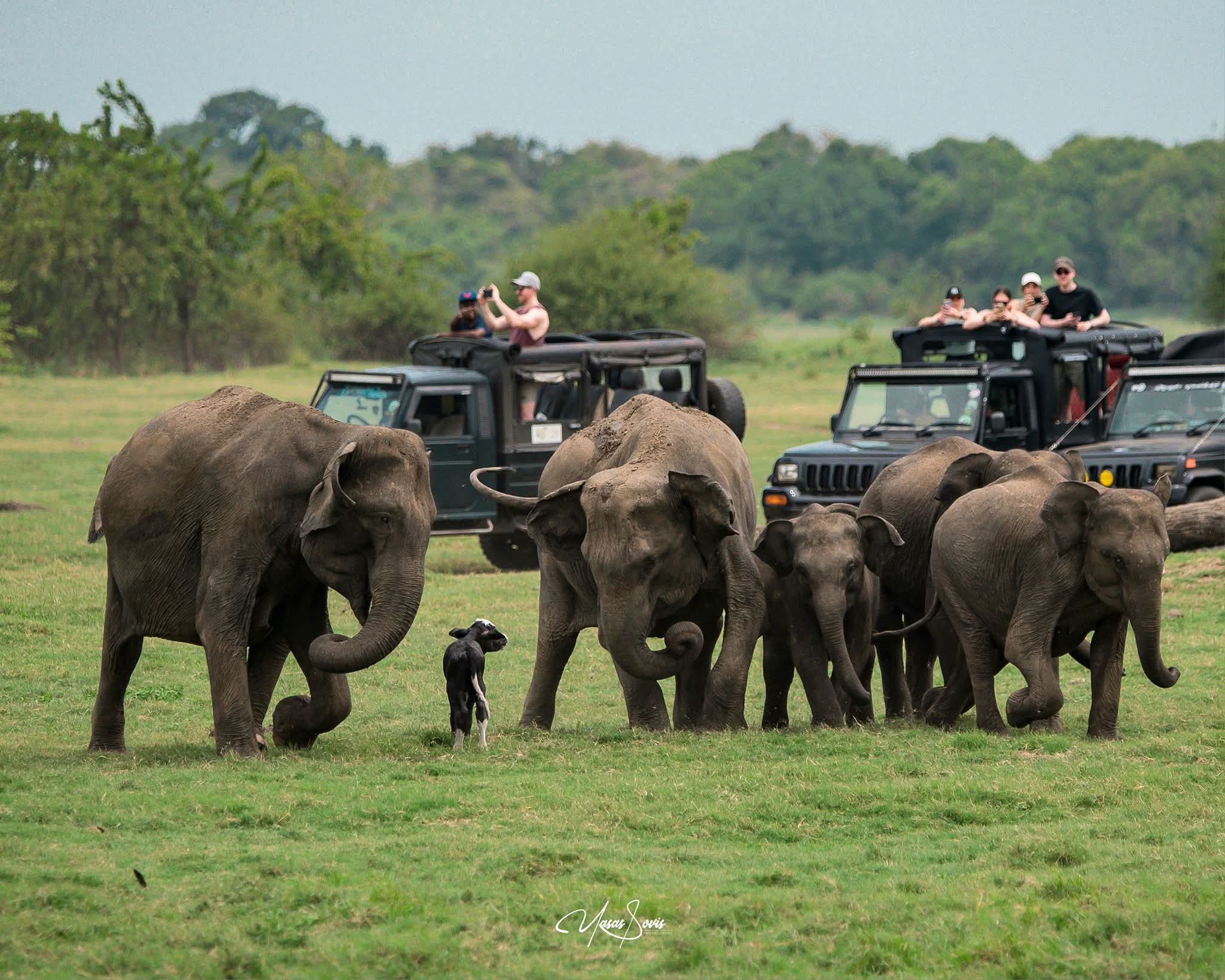
Yala crowding: Severe during peak season with 200-300+ vehicles entering Block 1 daily creating serious congestion problems. Popular leopard and elephant sighting locations attract 20-50 vehicles simultaneously, blocking roads, preventing optimal viewing and photography, and creating circus-like atmospheres contradicting wildlife sanctuary ideals. The crowding substantially degrades safari experiences particularly for photography-focused visitors or those seeking wilderness solitude.
Off-season comparison: During shoulder and off-peak seasons, both parks become much less crowded with Udawalawe offering peaceful, exclusive experiences. However, even during Yala's quieter periods, vehicle numbers typically exceed Udawalawe's peak season levels due to Yala's greater international fame.
Crowding impact on experience: This represents one of Udawalawe's strongest advantages—the ability to observe elephants without dozens of vehicles competing for position creates more relaxed, immersive experiences. Yala's crowding particularly frustrates photographers and wildlife enthusiasts seeking quality over quantity.

Safari Atmosphere and Experience Quality
Udawalawe atmosphere: Peaceful, relaxed safaris focusing primarily on elephants with secondary attention to other species. The predictable elephant encounters and manageable crowds create comfortable, stress-free experiences ideal for families, first-time safari visitors, and those wanting reliable wildlife viewing without intense competition or chaos.
Yala atmosphere: More intense, adventurous safaris with greater uncertainty about what you'll encounter. The possibility of leopards creates exciting anticipation, though the crowds at popular sightings generate frustration. The varied landscapes and diverse wildlife create more visually dynamic, unpredictable experiences appealing to wildlife enthusiasts comfortable with uncertainty.
Expertise requirements: Udawalawe's reliable elephant viewing succeeds even with basic drivers lacking extensive tracking skills. Yala rewards working with highly experienced guides who understand leopard behavior, track recent sightings via driver networks, and position vehicles strategically—expertise that significantly impacts sighting success.
Photography considerations: Udawalawe's open terrain, manageable crowds, and predictable subjects create superior photography conditions for most visitors. Yala's crowding often prevents optimal positioning, though the dramatic landscapes and potential for rare species (leopards, sloth bears) offer unique opportunities. Serious wildlife photographers generally prefer Udawalawe for elephants while accepting Yala's crowds for leopard possibilities.
Viewing Reliability and Expectations
Udawalawe reliability: Near-perfect for elephants, good for water buffalo and deer, excellent for water birds, acceptable for other mammals, negligible for leopards. Visitors can confidently expect comprehensive elephant viewing with additional species as bonuses.
Yala reliability: Good for general wildlife diversity, reasonable for leopards (20-30% single-safari probability), good for elephants (though less reliable than Udawalawe), occasional for sloth bears, excellent for varied landscapes. Visitors should expect good overall wildlife viewing with possibility but not guarantee of special sightings.
Managing expectations: Udawalawe's consistency makes it easier to manage expectations—you'll definitely see elephants spectacularly. Yala requires more flexible expectations—you might see leopards (incredible!), might miss them (disappointing but typical), and will definitely experience diverse habitats and wildlife overall.

Practical Considerations
Seasonal Variations
Udawalawe year-round consistency: Resident elephant population remains stable throughout all months making any time suitable for visiting. Dry season (May-September) provides optimal weather and golden grassland aesthetics, while wet season (October-April) brings lush greenery and exceptional birdwatching. Both seasons deliver excellent elephant viewing.
Yala seasonal closure: The park closes annually during September-October for vegetation recovery and reduced human disturbance during northeast monsoon onset. This mandatory closure eliminates Yala as an option during these months, automatically favoring Udawalawe for September-October travelers.
Yala seasonal variations: Wildlife viewing varies somewhat seasonally with dry season (May-August particularly) concentrating animals around water sources creating more predictable sightings. However, the variation is less dramatic than at purely seasonal parks like Minneriya where elephant numbers fluctuate drastically throughout the year.
Best visiting times: For Udawalawe, any month works well with subtle preferences for dry season (June-September) for photography or wet season (November-February) for birdwatching. For Yala, aim for dry season months (February-August) avoiding the September-October closure and periods immediately following heavy rains when vegetation becomes very dense.
Accessibility and Location
Udawalawe accessibility: Located 165 km from Colombo (3-4 hours), 90 km from Mirissa (2-2.5 hours), 80 km from Tangalle (1.5-2 hours), 110 km from Ella (3-3.5 hours). The park integrates naturally into itineraries combining south coast beaches with inland attractions, making it convenient for short Sri Lankan trips.
Yala accessibility: Located 240 km from Colombo (5-6 hours), 90 km from Mirissa (2-3 hours), 50 km from Tangalle (1-1.5 hours), 200+ km from hill country (5-6 hours). Yala positions better for extended south coast stays but requires longer transfers from other major destinations.
Day trip feasibility: Udawalawe works excellently as a day trip from south coast beaches with comfortable same-day returns. Yala also accommodates south coast day trips though longer drives make overnighting near the park more attractive for enjoying both morning and afternoon safaris without excessive travel.
Multi-park itineraries: Visiting both parks requires either dedicated wildlife-focused itineraries or extended Sri Lankan trips. Combining Udawalawe with south coast and Yala with different south coast sections creates logical geographic progressions without excessive backtracking.

Accommodation Options
Udawalawe accommodations: Primarily budget to mid-range guesthouses and safari lodges near the park entrance or in Embilipitiya (20 km away). A few higher-end eco-lodges provide premium options. The accommodation scene focuses on functionality and value rather than luxury, suiting most travelers seeking comfortable bases for safari activities.
Yala accommodations: Much broader range from budget guesthouses to luxurious tented camps and upscale resorts. Multiple accommodation clusters exist around different park entrances, with Tissamaharama and Palatupana offering the widest selections. The developed tourism infrastructure reflects Yala's long-established status and higher visitor numbers.
Accommodation quality: Yala generally offers more upscale accommodation options than Udawalawe, appealing to luxury travelers. However, both parks provide adequate options across budget ranges with the main difference being selection breadth rather than quality within each category.
Booking considerations: Both parks require advance booking during peak seasons (2-4 weeks ahead). Yala's popularity means accommodations fill even further in advance, particularly premium properties. Last-minute bookings work better at Udawalawe than Yala during busy periods.
Which Park Should You Choose?
Choose Udawalawe If You:
Prioritize elephant viewing: If elephants are your primary or sole wildlife interest, Udawalawe's near-guaranteed spectacular sightings make it the obvious choice. You'll definitely see elephants in numbers and behaviors that might not occur during Yala visits.
Want reliable, predictable experiences: First-time safari visitors, families with children, or anyone uncomfortable with uncertainty benefit from Udawalawe's consistency. You know what you're getting—excellent elephant encounters—without gambling on unpredictable sightings.
Prefer less crowded safaris: Wildlife photographers, those seeking peaceful wilderness experiences, or anyone frustrated by crowds strongly prefer Udawalawe's manageable vehicle numbers over Yala's peak season chaos.
Have limited time: The shorter distance from Colombo and south coast beaches makes Udawalawe more practical for quick trips or day excursions. If adding just one safari to a beach-focused holiday, Udawalawe's convenience and reliability deliver maximum value.
Travel during September-October: Yala's closure eliminates it as an option, making Udawalawe the default choice for autumn travelers seeking Sri Lankan wildlife experiences.
Focus on wildlife photography: Open terrain, predictable subjects, and manageable crowds create superior elephant photography conditions at Udawalawe. Unless specifically seeking leopard images (understanding low success probability), photographers generally achieve better results at Udawalawe.

Choose Yala If You:
Want to see leopards: This is Yala's unique offering—the world's best wild leopard viewing. If leopard sightings rank among your top priorities, Yala represents your best bet despite offering no guarantees.
Seek species diversity: Yala's varied habitats support greater overall species diversity including mammals, birds, and reptiles unavailable or rare at Udawalawe. Wildlife enthusiasts wanting comprehensive species lists prefer Yala's biodiversity.
Enjoy dramatic landscapes: Yala's varied topography including beaches, rocky outcrops, lagoons, and forests creates more visually stunning, photogenic landscapes than Udawalawe's relatively uniform grasslands. Landscape photographers and those appreciating scenic diversity favor Yala.
Accept crowds for unique opportunities: If willing to tolerate vehicle congestion and occasional chaos for the possibility of leopard encounters and diverse wildlife, Yala's trade-offs prove worthwhile.
Have flexible expectations: Experienced safari-goers comfortable with unpredictability and understanding that wildlife viewing involves luck appreciate Yala's adventurous character. The uncertainty becomes part of the appeal rather than a frustration.
Can visit during optimal seasons: If your travel dates align with Yala's best periods (particularly dry season months avoiding closures), the park's strengths outweigh its weaknesses.
Visit Both If You:
Have extended time in Sri Lanka: Week-long or longer trips allow visiting both parks, experiencing Udawalawe's reliable elephant viewing and Yala's diverse wildlife and leopard possibilities without choosing between them.
Are serious wildlife enthusiasts: Dedicated wildlife photographers and naturalists benefit from both parks' different characters—Udawalawe for guaranteed elephant photography and Yala for species diversity and the leopard quest.
Want comprehensive experiences: Combining both parks provides fuller understanding of Sri Lankan wildlife and ecosystems, showing how different habitats and management approaches create varied safari experiences.
Integrate naturally into itineraries: If your route naturally passes near both parks—perhaps combining hill country (closer to Udawalawe) with south coast (near Yala)—visiting both adds minimal inconvenience while maximizing wildlife experiences.

Cost Comparison
Safari Costs
Park entrance fees: Both parks charge similar rates based on visitor category (foreign nationals, SAARC citizens, Sri Lankan residents) with Yala typically slightly higher reflecting its greater fame and demand.
Vehicle and guide fees: Comparable rates between parks with variations depending more on operator quality and inclusions than park choice. Both parks support budget shared safaris through premium private experiences.
Overall safari expenses: Similar total costs for equivalent safari quality and duration. Neither park offers significant financial advantages—choose based on experience priorities rather than cost savings.
Accommodation Costs
Budget options: Both parks provide economical guesthouses at similar price points, though Udawalawe's smaller tourism industry might offer slightly better budget value during off-peak periods.
Mid-range properties: Comparable pricing for similar quality levels. Yala's broader selection provides more options at various price points within the mid-range category.
Luxury accommodations: Yala offers more upscale options including luxurious tented camps and resorts commanding premium rates. Udawalawe's luxury segment remains smaller with fewer ultra-premium choices.
Value assessment: Overall costs prove similar between parks with choice driven by experience preferences rather than significant price differences. Budget-conscious travelers find adequate economical options at both parks, while luxury seekers find more choices at Yala.
Transportation and Additional Costs
Getting there: Udawalawe's shorter distance from Colombo and popular beach areas reduces transportation costs for most itineraries. Yala's greater distance increases transfer expenses unless specifically staying on the south coast near the park.
Additional attractions: Both parks offer complementary experiences—Udawalawe's Elephant Transit Home provides touching orphan elephant viewing, while Yala sits near beaches, Kataragama temple, and historic Tissamaharama tank.
Overall trip budgeting: Park choice minimally impacts total safari costs with differences more in accommodation selection, transportation distances, and overall itinerary structure than inherent park expense differences.

Environmental and Conservation Considerations
Conservation Success
Udawalawe's achievements: Successfully protects substantial elephant population, provides safe haven for elephants displaced from surrounding agricultural areas, maintains healthy ecosystem supporting diverse wildlife, and generates economic benefits through tourism funding conservation while providing livelihoods reducing poaching pressure.
Yala's achievements: Harbors world's highest leopard density demonstrating apex predator conservation success, protects varied ecosystems from coastal beaches to interior forests, serves as important refuge for endangered species including sloth bears, and maintains biodiversity despite heavy tourism pressure.
Challenges: Udawalawe faces ongoing human-elephant conflict in buffer zones, habitat connectivity limitations isolating the population, and climate change pressures on water availability. Yala struggles with overtourism impacts including habitat degradation from vehicle traffic, wildlife stress from excessive human presence, and balancing conservation with tourism revenue dependence.
Visitor Impact
Udawalawe's management: Moderate vehicle numbers and enforced regulations create manageable visitor impacts. The open terrain means safari vehicles concentrate in viewing areas but the spacious park absorbs pressure reasonably well.
Yala's challenges: Severe overcrowding during peak season creates substantial impacts including habitat damage from off-road driving, wildlife behavioral changes from constant vehicle pressure, and ecosystem stress from hundreds of daily vehicle incursions.
Responsible tourism: Visitors to both parks support conservation through entrance fees funding operations, though choosing operators committed to ethical wildlife viewing, respecting distance regulations, and visiting during off-peak periods when possible reduces individual impacts.
Supporting Conservation
Making positive contributions: Choose reputable operators following park regulations, maintain appropriate wildlife viewing distances, never feed or disturb animals, report violations witnessed during safaris, consider visiting during shoulder seasons reducing peak period pressure, and support conservation organizations working in Sri Lanka through donations or volunteer time if possible.
Park selection impact: Your choice between parks based on personal priorities proves less important than how you visit. Responsible, ethical safari participation at either park supports conservation more than choosing one park over another for purely conservationist reasons.

Expert Recommendations by Traveler Type
First-Time Safari Visitors
Recommendation: Udawalawe
Udawalawe's predictability, reliability, and manageable crowds create ideal introduction to safari experiences. First-timers benefit from near-guaranteed elephant sightings preventing the disappointment that can occur at less reliable parks, straightforward safari logistics with less confusion about where animals might be, and comfortable experiences without the intensity of Yala's crowds. The satisfaction of definitely seeing elephants spectacularly builds confidence for potentially visiting more challenging parks later while ensuring positive first safari memories.
Families with Children
Recommendation: Udawalawe
Families strongly benefit from Udawalawe's family-friendly characteristics including guaranteed elephant sightings that thrill children and prevent disappointment, shorter travel times from beach areas maintaining better schedules for naps and meals, less crowded safaris with more relaxed atmospheres and flexibility, and manageable safari durations (3-4 hours) suiting children's attention spans. The predictable elephant viewing ensures family safari investments pay off with memorable experiences for all ages.
Wildlife Photographers
Recommendation: Udawalawe (unless specifically seeking leopard images)
Photographers prioritizing elephants and quality shooting conditions over rare species choose Udawalawe for its open terrain allowing clear shots without vegetation obstruction, manageable vehicle numbers enabling optimal positioning, predictable subjects allowing planning and preparation, and excellent lighting conditions during morning and afternoon safaris. However, photographers specifically seeking leopard portfolios must accept Yala's crowds and challenges as the price for world-class leopard opportunities.

Serious Wildlife Enthusiasts
Recommendation: Visit both if possible, otherwise Yala
Dedicated wildlife enthusiasts and naturalists seeking maximum species diversity and the thrill of tracking rare predators lean toward Yala despite its crowds. The greater habitat variety, higher overall species count, reasonable leopard possibilities, and more challenging, engaging safari experiences appeal to experienced wildlife watchers. However, serious enthusiasts with adequate time ideally visit both parks, experiencing Udawalawe's elephant spectacle and Yala's broader diversity.
Birdwatchers
Recommendation: Slight edge to Yala, but both excellent
Serious birders find Yala's greater habitat diversity produces marginally higher species counts and unique coastal specialties. However, Udawalawe's concentrated wetland birds create more dramatic water bird viewing. Both parks offer excellent birding—choose based on other priorities since birding quality proves comparable.
Budget Travelers
Recommendation: Udawalawe for cost-saving opportunities
Budget-conscious travelers benefit from Udawalawe's shorter distances from budget beach accommodations, adequate budget guesthouse options, similar safari costs but easier shared safari connections, and day trip feasibility from economical beach bases. However, cost differences prove modest—choose primarily based on experience preferences rather than significant budget impacts.
Luxury Travelers
Recommendation: Yala for upscale accommodation selection
Luxury-focused travelers find Yala's broader range of premium accommodations, established luxury safari infrastructure, and upscale amenities appealing. However, both parks offer adequate upscale options—luxury travelers should choose based on wildlife priorities rather than assuming Yala automatically provides superior luxury experiences.
Alternative: Other Sri Lankan Safari Options
Minneriya and Kaudulla National Parks
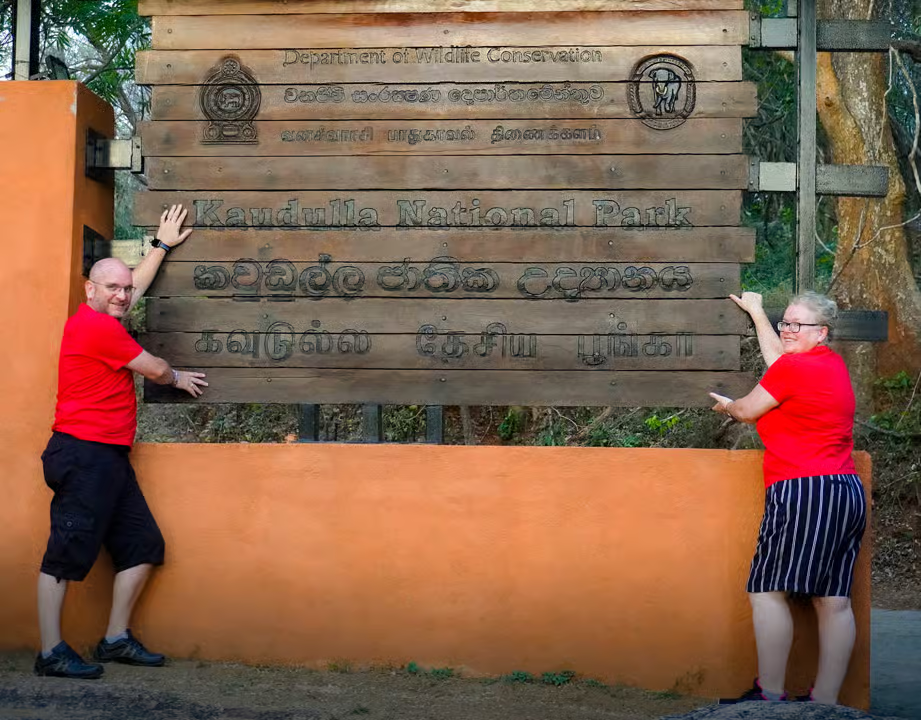
These seasonal parks (peak July-September) host spectacular elephant gatherings sometimes exceeding even Udawalawe's numbers. However, their highly seasonal nature and proximity to Cultural Triangle sites rather than beaches create different itinerary considerations. Worth considering for July-September travelers already visiting Sigiriya/Dambulla area.
Wilpattu National Park
Sri Lanka's largest park with good leopard density but more challenging access (northwest location), fewer tourist facilities, and less reliable sightings than Yala. Appeals to adventurous travelers seeking wilderness experiences away from crowds willing to accept more uncertainty.
Bundala National Park
Smaller coastal park near Yala famous for migratory water birds and wetlands. Often combined with Yala as additional birding-focused safari but doesn't replace either Yala or Udawalawe as primary wildlife destination.

Final Verdict: Making Your Choice
Udawalawe and Yala National Parks both deliver outstanding Sri Lankan safari experiences, just in different ways suited to different priorities. Neither park objectively surpasses the other universally—rather, they excel in different dimensions making one or the other better for specific travelers.
Choose Udawalawe if you prioritize guaranteed elephant encounters, prefer reliable predictable experiences, want less crowded safaris, have limited time or travel during September-October, focus on elephant photography, or are first-time safari visitors or families with children. Udawalawe's consistency, accessibility, and manageable crowds create satisfying experiences for the majority of travelers seeking Sri Lankan wildlife encounters.
Choose Yala if leopard viewing ranks among your top priorities despite no guarantees, you seek maximum species diversity, you appreciate dramatically varied landscapes, you accept crowds for unique opportunities, you're an experienced safari-goer comfortable with unpredictability, or you can visit during optimal seasons (avoiding closures and peak crowding).
Visit both if you have extended time allowing comprehensive Sri Lankan wildlife experiences, you're serious wildlife enthusiasts wanting varied ecosystem exposure, or your itinerary naturally integrates both parks without excessive backtracking or inconvenience.
Most importantly, understand that both parks offer exceptional wildlife viewing by global standards. Sri Lanka is fortunate to protect multiple outstanding wildlife destinations—your safari experience will prove memorable and valuable regardless of whether you choose Udawalawe, Yala, or successfully visit both during your Sri Lankan adventure.
Base your decision on honest assessment of your priorities, travel constraints, tolerance for crowds and uncertainty, and what will most satisfy your personal definition of safari success. Trust that either choice delivers remarkable wildlife encounters showcasing Sri Lanka's extraordinary biodiversity and conservation achievements.