Family-Friendly Udawalawe Safari: Complete Guide for Kids & Parents

A family-friendly Udawalawe safari represents one of Sri Lanka's most rewarding wildlife experiences for families traveling with children of all ages. Unlike many wildlife destinations where animal sightings depend on luck and perfect timing, Udawalawe National Park virtually guarantees close encounters with elephants—the animal that captivates children's imaginations more than any other. The park's open terrain allows even young children to easily spot wildlife from safari vehicles, the guaranteed elephant sightings prevent the disappointment that can ruin family trips to less reliable parks, and the relatively compact size means safaris can be completed in 3-4 hours without exhausting young travelers. Whether you're introducing toddlers to their first wild animals, engaging school-age children in wildlife education, or creating memorable bonding experiences with teenagers, Udawalawe provides the perfect setting for family safari adventures that combine excitement, education, comfort, and safety. This comprehensive guide covers everything parents need to know about planning a successful Udawalawe family safari—from age-appropriate activities and safety considerations to keeping children engaged, managing expectations, and creating magical wildlife memories that will last lifetimes. We'll explore practical tips for different age groups, educational opportunities that transform safaris into learning experiences, and strategies for ensuring everyone from toddlers to grandparents enjoys this incredible Sri Lankan wildlife adventure.
Why Udawalawe Is Perfect for Family Safaris
Udawalawe National Park possesses several characteristics that make it exceptionally well-suited for families with children, particularly compared to other wildlife destinations.
Guaranteed Elephant Sightings Eliminate Disappointment
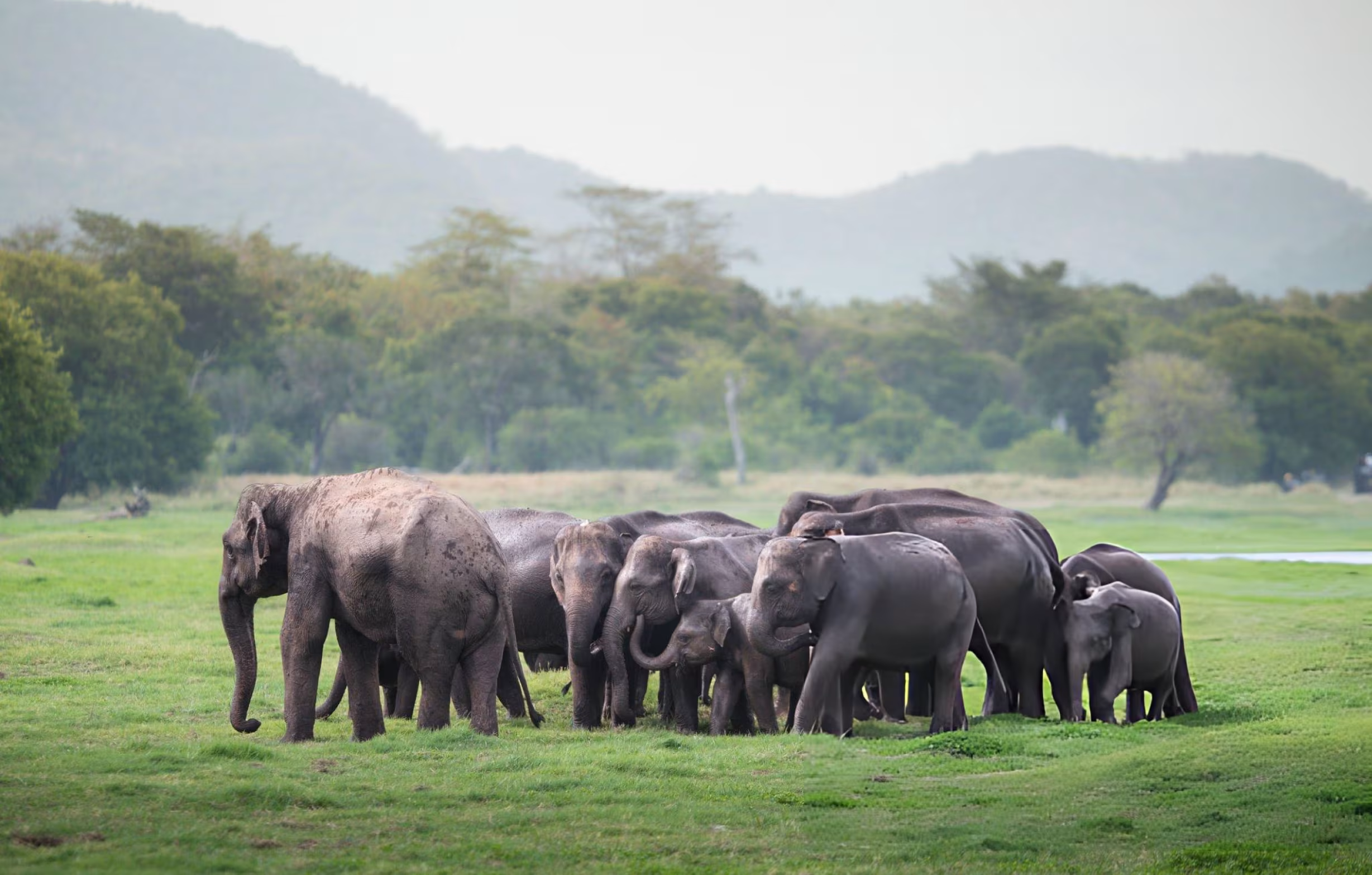
Reliability matters enormously when traveling with children whose patience and understanding differ from adults. The heartbreak of a child who's traveled halfway around the world hoping to see elephants only to spend hours driving through a park seeing nothing can ruin family holidays. Udawalawe's stable resident population of 500-600 elephants ensures that virtually every safari encounters these magnificent animals—often within the first 30 minutes.
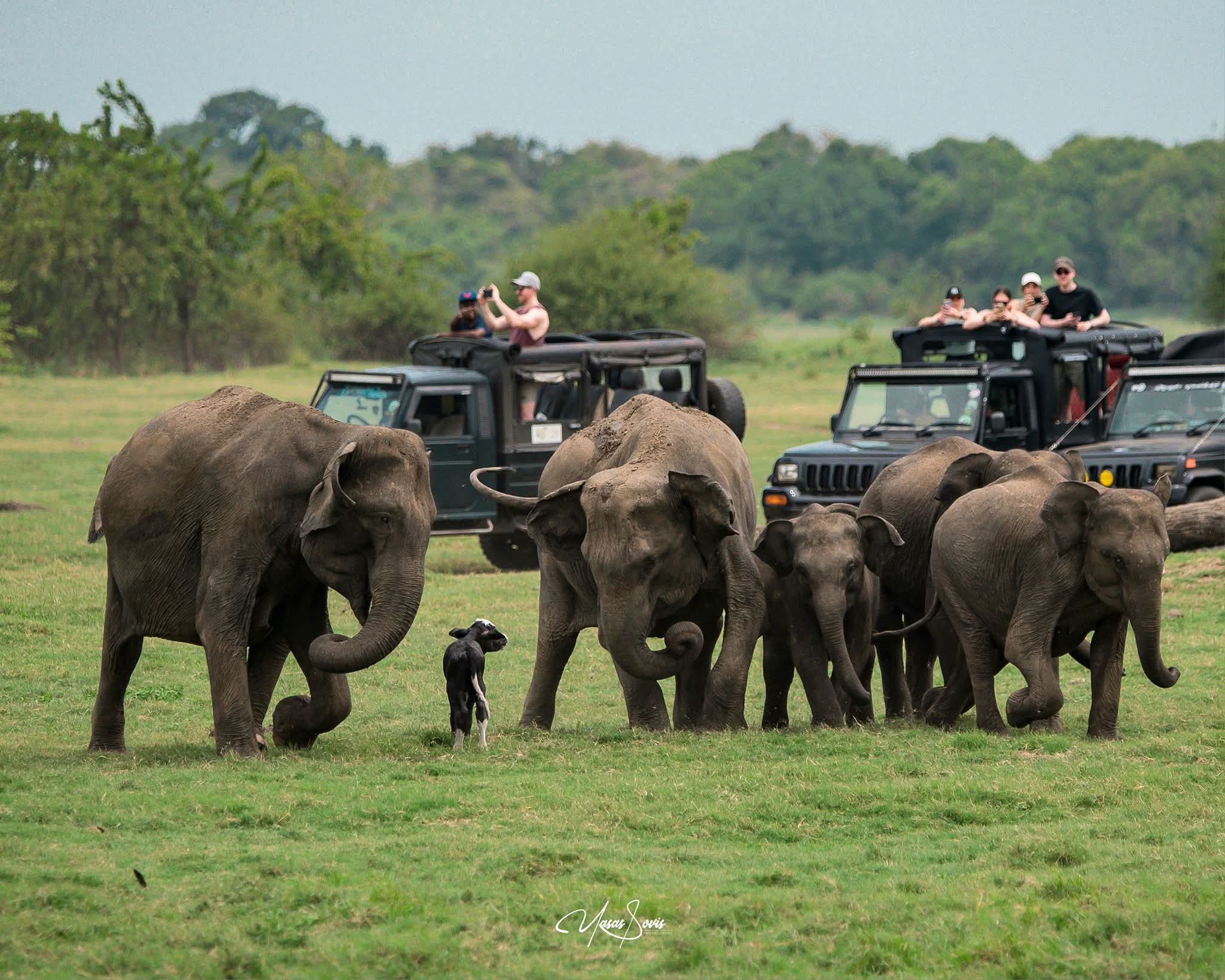
Multiple elephant encounters during a single safari mean children experience not just one sighting but numerous opportunities to observe different herds, behaviors, and ages. They'll see playful baby elephants, protective mothers, massive bulls, and entire family groups, creating varied experiences that hold attention better than a single brief sighting might. The abundance prevents the "we saw one elephant for two minutes" scenario that disappoints children expecting more substantial wildlife viewing.

Building excitement becomes easier when you can confidently promise children they'll see elephants. Rather than hedging with "we might see elephants if we're lucky," parents can genuinely assure children that elephant encounters are virtually certain. This confidence helps build anticipation and excitement during the lead-up to the safari rather than managing expectations downward to prevent disappointment.
Open Terrain Makes Wildlife Easy to Spot
Visibility challenges plague many wildlife parks where dense vegetation obscures animals, requiring adults to point out barely-visible creatures that children simply cannot see. Young children especially struggle spotting camouflaged animals in thick forest, leading to frustration when adults exclaim excitedly about wildlife the children can't locate. Udawalawe's open grassland terrain eliminates this problem—elephants, buffalo, and deer stand out clearly against relatively simple backgrounds.
Children can spot animals themselves, creating empowering experiences where they discover wildlife rather than relying entirely on adult pointing. The thrill of a child shouting "I see an elephant!" as they independently spot a herd creates pride and engagement that passive viewing never achieves. This active participation transforms children from disinterested passengers to engaged wildlife explorers.
Photography opportunities for families benefit enormously from open terrain. Parents can capture clear photos of children with wildlife visible in backgrounds, creating treasured family memories. The unobstructed views mean even smartphone photos turn out well, allowing families to document their safari experiences without requiring professional camera equipment.
Comfortable Safari Duration Suits Short Attention Spans
Three to four-hour safaris represent Udawalawe's standard offering, providing sufficient time for excellent wildlife viewing without the exhaustion that full-day safaris inflict on young children. Even toddlers and preschoolers can manage this duration with appropriate snacks, drinks, and bathroom planning. Full-day safaris, while available, typically prove too demanding for children under 8-10 years old.
Flexible scheduling allows families to choose morning (6:00-10:00 AM) or afternoon (3:00-6:00 PM) safaris based on children's rhythms. Families with early risers might prefer morning safaris when children are fresh and alert. Families with children who struggle with early wake-ups can opt for afternoon departures, avoiding the 5:30 AM wake-up calls that turn some children into cranky companions. The ability to select timing suited to your family's specific needs enhances everyone's experience.
Bathroom considerations while challenging (facilities within the park are extremely limited), become manageable during 3-4 hour safaris with proper preparation. Strategic bathroom stops before entering the park, careful fluid management, and understanding that emergencies can be accommodated (guides know discreet locations for emergency stops) help parents manage this concern with less stress than full-day excursions would create.

Age-Specific Guide: Udawalawe Safaris for Different Age Groups
Children's needs, capabilities, and interests vary dramatically by age. Tailoring your Udawalawe safari approach to specific age groups maximizes enjoyment for everyone.
Babies and Toddlers (0-3 Years)
Safari feasibility for this age group is absolutely possible at Udawalawe, though parents should set realistic expectations. Babies and toddlers won't remember the experience or understand the significance of wildlife viewing, but they can participate successfully with proper planning. Many families include even very young children in safaris to avoid separation from caregivers or to begin building family travel traditions.
Timing considerations strongly favor afternoon safaris for families with babies and toddlers. The 2:30-3:00 PM departure timing allows children to nap during the morning, wake refreshed, and participate in the safari during their typically alert afternoon hours. Morning safaris requiring 5:30 AM wake-ups often produce cranky, miserable toddlers whose discomfort ruins the experience for everyone.
Essential supplies for this age group include favorite snacks and drinks (familiar foods comfort children and prevent hunger-driven meltdowns), diapers and wipes (bring extras—you can't pop into a store mid-safari), sun protection including hats, sunscreen, and long sleeves, comfort items like favorite stuffed animals or blankets, and baby carrier or wrap for holding restless babies. Most safari jeeps accommodate strollers in the vehicle but children must be held during drives due to lack of car seat mounting points.
Engagement strategies for toddlers include narrating what's happening ("Look, the baby elephant is playing with his trunk!"), making animal sounds together, singing animal-related songs during drives between sightings, and keeping expectations low—if toddlers are happy and relatively content for even half the safari, consider it a success. Tablets with pre-downloaded animal videos or games can provide distraction during quieter periods, though many parents prefer avoiding screens to maintain engagement with the surroundings.
Safety notes specific to young children include never allowing children to stand or lean out of safari vehicles (even when stopped), ensuring secure hand-holding when exiting vehicles at designated stops, protecting tender skin from intense tropical sun, and staying hydrated in the heat. Very young children can't communicate discomfort effectively—parents must monitor for signs of overheating, sunburn, or distress.

Preschoolers (4-6 Years)
Peak safari age for many families occurs during the preschool years when children are old enough to understand and remember wildlife experiences but young enough to maintain wonderment and excitement that older children sometimes lose. Four to six-year-olds typically display genuine enthusiasm for animals, ask endless questions that demonstrate engagement, and create treasured memories that persist into adulthood.
Educational preparation before the safari enhances the experience enormously for this age group. Spend the week leading up to your safari reading children's books about elephants and African/Asian wildlife, watching age-appropriate wildlife documentaries (BBC's "Life" series, Disney Nature films), learning to identify animals they'll see (elephants, buffalo, deer, crocodiles, birds), and discussing elephant behaviors like bathing, eating, and family groups. This preparation builds excitement and provides context that helps children understand what they're observing.
Engagement activities during the safari transform passive viewing into active learning. Create a simple "safari bingo" card with pictures of animals to spot (elephant, baby elephant, water buffalo, deer, crocodile, large bird), bring binoculars sized for small hands allowing children to "search" for animals themselves, encourage counting games ("Let's count how many elephants we see!"), and ask open-ended questions ("What do you think that baby elephant is doing?" "Why do you think elephants spray water on themselves?").
Photography involvement empowers preschoolers and creates keepsakes. Give children disposable cameras or old smartphones/tablets (not valuable devices that breaking would devastate you) allowing them to photograph wildlife from their perspective. Children's photos—often blurry, poorly framed, or capturing unexpected subjects—provide precious mementos showing how they experienced the safari. Print these photos after returning home and help children create safari scrapbooks reinforcing memories.
Attention span management remains important even with engaged preschoolers. Bring quiet activities for use between wildlife sightings—coloring books with animal themes, small figurines of safari animals for imaginative play, simple nature journals where children can draw animals they see. Strategic snack deployment also helps—releasing special treats when attention flags often buys another 15-30 minutes of good behavior.
School-Age Children (7-12 Years)
Prime learning age for truly educational wildlife experiences, school-age children possess the attention span, cognitive development, and knowledge base to deeply engage with safari experiences. They can understand ecosystems, appreciate conservation concepts, remember detailed information about animal behaviors, and ask thoughtful questions that demonstrate genuine interest rather than simple excitement.
Pre-safari education for this age group can be more sophisticated—research elephant biology and behavior together, learn about Asian vs. African elephants and their differences, understand the concept of food chains and how elephants fit into their ecosystem, explore conservation challenges facing elephants in Sri Lanka, and study the geography and climate of the region. This preparation creates context that dramatically enriches their safari observations.
Photography skills development transforms safaris into learning experiences extending beyond wildlife. Teach basic photography concepts like composition (rule of thirds, foreground/background), lighting (why early morning and late afternoon produce better photos), perspective (getting low for more interesting angles), and patience (waiting for the right behavioral moment rather than shooting immediately). Many children this age become genuinely engaged in photography, creating a hobby that serves them well throughout their lives.

Naturalist interaction benefits enormously from school-age children's ability to ask sophisticated questions. Brief your safari guide beforehand that you have curious children eager to learn, encouraging the guide to share detailed information about elephant behavior, ecology, and conservation. Many guides enthusiastically engage with genuinely interested children, sharing knowledge they might not volunteer to less engaged groups. Encourage children to prepare questions before the safari to ask the guide.
Journaling activities create lasting records while developing writing skills. Provide children with safari journals where they can record the date, weather, animals observed, behaviors witnessed, and personal reactions. Younger children might draw and label simple pictures; older children can write detailed descriptions. These journals become treasured keepsakes that children enjoy rereading years later, and the writing process reinforces memories and observations.
Conservation discussions resonate with school-age children's developing sense of justice and ethics. Discuss human-elephant conflict, habitat loss, and conservation efforts to protect Udawalawe's elephants. Visit the Elephant Transit Home after your safari (or before) to see orphaned baby elephants receiving care, creating emotional connections to conservation work. Many children this age develop genuine conservation commitments that influence their environmental awareness long-term.
Teenagers (13+ Years)
Engagement challenges with teenagers often stem from appearing "too cool" for family activities or being distracted by devices and social concerns. However, Udawalawe safaris can genuinely engage even skeptical teenagers if approached appropriately. The key lies in providing agency, avoiding childish treatment, and creating space for independent engagement rather than forced family participation.
Photography as engagement tool works exceptionally well with teenagers, many of whom have strong interests in Instagram, photography, and visual documentation. Allow teenagers to bring their own cameras or use smartphones, encouraging them to capture images they find compelling rather than forcing posed family photos. Many teenagers become genuinely absorbed in wildlife photography, competing with themselves to capture increasingly impressive shots.
Technology integration rather than prohibition often works better with teenagers. Allow photo sharing on social media (after the safari when connectivity returns), encourage wildlife video recording for personal projects or school presentations, permit music listening during drives between sightings (with earbuds so others aren't disturbed), and use safari downtime for journaling via devices if preferred over paper notebooks. Acknowledging teenagers' digital lives rather than fighting them creates more cooperative participation.
Responsibility and independence appeal to teenagers' developmental stage. Put teenagers in charge of specific safari elements—researching and briefing the family on elephant behaviors before the trip, managing safari timing and schedule coordination, serving as family photographer responsible for documenting the experience, or leading post-safari discussions about what everyone observed. This responsibility creates investment and engagement that passive participation doesn't achieve.
Conservation and global awareness connect to many teenagers' emerging social consciousness. Discuss conservation complexities—balancing human needs with wildlife protection, economic development pressures on habitats, the privileged position that allows your family to travel for wildlife viewing while local communities bear costs of living alongside dangerous animals. These sophisticated discussions treat teenagers as thinking individuals capable of nuanced understanding rather than children requiring simplified explanations.

Safety Considerations for Family Safaris
Ensuring children's safety during Udawalawe safaris requires understanding specific risks and implementing appropriate precautions.
Vehicle Safety
Staying seated represents the most fundamental safety rule. Safari jeeps lack seatbelts in many cases, and the rough terrain creates bouncing that could throw standing children from vehicles. Insist that children remain seated whenever the vehicle is moving, even during slow drives. Explain the importance in age-appropriate terms—young children understand "sitting keeps you safe," while older children can understand physics of sudden stops or bumps ejecting standing passengers.
Pop-up roof hatches present particular risks—while standing through roof hatches provides excellent viewing and photography angles, children must be closely supervised. Hold young children securely around the waist if allowing standing viewing, ensure older children grasp safety bars firmly, forbid leaning out beyond the roof line, and require sitting immediately when the vehicle begins moving. Many families choose to keep children seated throughout safaris rather than managing roof hatch risks.
Entry and exit procedures require attention and supervision. When vehicles stop at designated rest areas, ensure children wait for complete stop before attempting to exit, use hand-holding for young children stepping down from tall vehicles, supervise closely to prevent running off independently, and re-board carefully without rushing. Safari guides often assist with entry/exit but parents should maintain primary supervision of their children.
Wildlife Safety
Distance respect must be taught clearly and enforced consistently. Explain that while safari vehicles provide protection, elephants and other wildlife are wild, powerful animals that could hurt people who get too close or behave threateningly. Children must understand to never attempt exiting vehicles to approach wildlife, feeding animals is dangerous and prohibited, sudden movements or loud noises can startle or anger animals, and the safari guide's instructions regarding safety must be followed immediately without question.
Elephant behavior awareness helps children recognize when elephants are agitated. Teach basic warning signs—ears pulled back flat against head indicates annoyance or aggression, trunk held in S-curve suggests the elephant is considering charging, trumpeting or head shaking signals distress or threat, and mock charges (rushing forward then stopping) warn intruders to back away. If children understand these signals, they're less likely to request approaches to obviously stressed animals.
Emergency procedures should be discussed beforehand so children know what to do if problems arise. Explain that if the guide says to be quiet and still, everyone must freeze immediately, if told to sit down, children should drop into seats without question, and if animals charge or approach closely, children should remain calm rather than screaming or panicking (easier said than done, but discussion helps). Role-playing emergency scenarios with younger children can prepare them for these unlikely but possible situations.

Health and Environmental Safety
Sun protection becomes critical in Sri Lanka's intense tropical sun, particularly for children's sensitive skin. Apply high-SPF (50+) sunscreen 30 minutes before departing and reapply every 2 hours even in shaded vehicles (sunlight reflects off surfaces creating exposure), provide wide-brimmed hats or caps that stay secure in vehicle breezes, dress children in lightweight long-sleeve shirts and long pants offering coverage without overheating, and consider UV-blocking sunglasses for older children who'll keep them on.
Hydration management prevents heat-related illness while balancing against limited bathroom access. Encourage regular small sips of water throughout the safari rather than gulping large amounts, bring electrolyte drinks or hydration tablets for extremely hot conditions, monitor children for signs of dehydration (decreased urination, lethargy, dry mouth), and ensure bathroom stop before entering the park. Very young children in diapers require less bathroom concern but need particularly careful hydration monitoring since they can't communicate thirst effectively.
Insect protection while less critical at Udawalawe than in wetter regions, remains sensible. Apply child-safe insect repellent before the safari (focusing on ankles, wrists, and neck), dress in light-colored clothing that makes insects more visible, check for ticks after the safari if you walked in grassland areas, and monitor any insect bites for signs of infection. Mosquito-borne diseases like dengue occur in Sri Lanka, though dry-zone parks like Udawalawe have lower mosquito populations than wet-zone areas.
Motion sickness affects some children on the rough, bouncing safari roads. If your child is prone to motion sickness, consider giving age-appropriate anti-nausea medication before departure (consult your pediatrician), seat motion-sick children in front seats where bouncing is less severe, encourage looking at distant horizons rather than close objects, bring plastic bags and wipes for accident management, and plan for breaks if nausea develops. Morning safaris when children have empty stomachs may reduce nausea compared to afternoon safaris after heavy lunches.
Keeping Children Engaged Throughout the Safari
Maintaining children's interest and enthusiasm during 3-4 hour safaris requires strategic planning and creative activities.
Pre-Safari Preparation Activities
Build anticipation during the days or weeks before your safari through various engagement activities. Create countdown calendars marking days until the safari, decorate them with elephant stickers or drawings, watch wildlife documentaries together focusing on elephants and Sri Lankan wildlife, read age-appropriate books about safaris, elephants, and wildlife exploration, and make simple craft projects like elephant masks or binoculars from toilet paper rolls.
Animal identification skills developed beforehand help children actively participate in wildlife spotting. Create flashcards showing elephants, water buffalo, spotted deer, crocodiles, and common birds found at Udawalawe. Practice identification until children can distinguish species independently. This preparation transforms children from passive observers into active wildlife detectives during the safari.
Question generation encourages deeper engagement. Help children create lists of questions they want to ask the safari guide about elephants—"Why do elephants have trunks?" "How much do baby elephants weigh?" "What do elephants eat?" "How do elephants communicate?" Having prepared questions gives children purpose and investment in the experience while providing the guide with clear direction for educational engagement.

During-Safari Activities
Safari bingo provides structured engagement throughout the experience. Create custom bingo cards featuring animals and behaviors common at Udawalawe—elephant, baby elephant, bathing elephant, water buffalo, spotted deer, crocodile, large bird, elephant eating, elephant spraying water, etc. Children mark off squares as they observe each item, competing to complete their cards. Small prizes for completion add extra motivation.
Scavenger hunts similar to bingo but with specific challenges—find an elephant with tusks, spot a baby elephant walking under its mother, observe an elephant bathing, count how many water buffalo you see in one place, find a bird you can't identify. These focused challenges direct attention and create goals beyond passive viewing.
Photography projects engage children actively throughout the safari. Assign specific photo missions for different age groups—preschoolers might photograph "animals that are brown," school-age children could document "different elephant behaviors," and teenagers might pursue "the best artistic composition." Review photos together after the safari, discussing what everyone captured and what they observed.
Storytelling and imagination transform wildlife observations into narrative engagement. Encourage children to invent stories about individual elephants—"That big elephant is the grandmother, and she's taking her family to the water because it's bath time." "The baby elephant is learning to use his trunk from his mother." These imaginative narratives create personal connections to the animals while demonstrating observation and comprehension.
Counting and math games provide educational engagement during wildlife viewing. "How many elephants can you count in that herd?" "If we see 8 elephants in this group and 12 in the next group, how many total?" "What fraction of the elephants are babies?" These games apply academic skills in real-world contexts that feel like play rather than work.
Managing Quiet Periods
Downtime entertainment proves necessary during drives between major sightings when nothing interesting appears. Bring quiet activities that don't require extensive setup—coloring books and crayons, simple card games, I-Spy focused on landscape features ("I spy something brown/green/far away"), nature-themed word games, or audio books related to animals or adventure. Strategic snack deployment during these periods also helps maintain good moods.
Rest periods for younger children might be necessary during longer safaris. Bring small blankets or comfort items allowing toddlers to nap during quiet stretches. While parents might feel they're "missing" safari time, a 20-minute nap often revitalizes a cranky toddler making the remainder of the safari enjoyable rather than miserable.
Guide interaction during quiet periods benefits children who enjoy learning. Ask the safari guide to share stories about specific elephants, explain the park's ecosystem, discuss conservation work, or describe memorable wildlife encounters they've experienced. Many guides excel at engaging children and appreciate families genuinely interested in learning rather than just photo-taking.

Educational Opportunities: Making Safaris Learning Experiences
Udawalawe safaris offer rich educational opportunities across multiple disciplines when approached intentionally.
Biological and Ecological Learning
Elephant anatomy and physiology becomes tangibly real when children observe these features firsthand. Point out the trunk's incredible versatility as elephants use it for drinking, bathing, eating, communicating, and greeting—it functions as arm, hand, nose, and communication tool simultaneously. Discuss ear size relative to African elephants and how Asian elephants use ears for cooling through blood vessel-rich surfaces. Observe skin thickness and why elephants need mud baths for sun protection and insect repulsion.
Herbivore adaptations demonstrate evolutionary specialization. Watch elephants grazing and discuss how their digestive systems process enormous quantities of low-nutrition vegetation, their constant feeding requirement (16-18 hours daily), and how their size relates to metabolic efficiency. Compare elephant feeding to deer grazing or buffalo wallowing, highlighting different herbivore strategies.
Social behavior and family structure provides insights into mammalian social systems. Observe matriarchal leadership with the oldest female making decisions, cooperative calf rearing with multiple females protecting young, bachelor group dynamics among young males, and communication methods including vocalizations, body language, and physical contact. These observations create understanding that elephants aren't simple animals but complex social beings.
Ecosystem relationships connect individual animals to broader environmental contexts. Discuss elephants as "ecosystem engineers" whose feeding creates grassland habitats for other species, seed dispersal through dung supporting plant diversity, water access created by elephant digging during droughts benefiting other animals, and the top-down effects of elephants on entire ecosystems.

Conservation and Environmental Science
Habitat protection importance becomes clear when children understand that Udawalawe's borders protect elephants from human-elephant conflict outside the park. Discuss how agricultural expansion reduces elephant habitat, why electric fencing surrounds the park, and the challenges of balancing human needs with wildlife protection.
Human-wildlife conflict presents age-appropriate ethical dilemmas. Explain that elephants sometimes leave the park and damage farmers' crops, causing economic hardship for families who may retaliate against elephants. Discuss potential solutions—compensation programs, early warning systems, alternative livelihoods. These complex issues teach children that conservation involves difficult trade-offs without simple right answers.
Climate change impacts on elephant habitats can be introduced with older children. Discuss how changing rainfall patterns affect grasslands and water availability, how temperature increases stress elephants, and how habitat fragmentation prevents elephants from adapting by moving to new areas. This connects global environmental issues to specific wildlife populations children have personally observed.
Personal conservation actions empower children to contribute. Discuss what families can do to support elephant conservation—reducing plastic use (which pollutes elephant habitats), supporting conservation organizations, making environmentally conscious choices, and sharing safari experiences to build awareness among friends and family. Giving children actionable steps prevents the helplessness that can accompany learning about conservation challenges.
Geography and Cultural Learning
Sri Lankan geography comes alive through direct experience. Discuss how Udawalawe's dry zone climate differs from the country's wet zones, how ancient irrigation systems like the Udawalawe Reservoir supported historical civilizations, and how the island's position created unique ecosystems and endemic species.
Cultural connections to elephants in Sri Lankan society provide historical context. Explain elephants' importance in Buddhist traditions, their historical use in warfare and royal ceremonies, their presence in temple festivals (while noting ethical concerns about temple elephant treatment), and how attitudes toward elephants have evolved from utilitarian to conservation-focused.
Sustainable development challenges facing Sri Lanka and similar developing nations create understanding of complex global issues. Discuss how countries balance economic development needs with environmental protection, poverty reduction pressures on natural habitats, and the role of tourism in funding conservation. These discussions, appropriate for older children and teenagers, build global awareness and cultural sensitivity.
Combining Udawalawe Safari with Other Family Activities
Maximizing your family's Sri Lankan experience involves thoughtfully combining the Udawalawe safari with complementary activities.
Elephant Transit Home Visit
The Elephant Transit Home located just 5 kilometers from Udawalawe's entrance represents an essential companion activity to your safari. This rehabilitation facility cares for orphaned baby elephants rescued from human-elephant conflict situations, wells they've fallen into, or whose mothers died from poaching or natural causes. The facility raises these babies until they're old enough (typically 4-5 years old) to be released back into the wild.
Feeding times (typically 9:00 AM, 12:00 PM, 3:00 PM, and 6:00 PM) provide touching viewing opportunities as tiny elephants eagerly approach for their milk bottles. Watching caretakers bottle-feed baby elephants creates emotional connections that deepen children's appreciation for elephant conservation. The babies' playful antics—splashing in mud, pushing each other, exploring with their trunks—delight children of all ages.

Educational value extends beyond cuteness as the facility's mission demonstrates practical conservation work. Explain to children that these babies lost their mothers and need human care temporarily, but the goal is always returning them to wild herds, creating independence from humans rather than creating dependent captive elephants. This nuanced discussion builds understanding that conservation involves intervention but ultimately prioritizes wild populations.
Timing coordination works well by visiting the Transit Home before or after your Udawalawe safari. Many families do a morning safari (6:00-10:00 AM), break for lunch and rest, visit the 3:00 PM feeding at the Transit Home, then proceed to evening activities. Alternatively, visit the noon feeding, have lunch nearby, then do an afternoon safari (3:00-6:00 PM).
Beach and Coast Combinations
South coast beaches located 2-3 hours from Udawalawe create excellent combinations for families wanting to mix wildlife with beach time. Popular family-friendly beaches include Mirissa (excellent for families, calm bay areas safe for children), Tangalle (quieter than Mirissa, long beach with gentle waves), Hiriketiya (small bay perfect for young swimmers, relaxed atmosphere), and Unawatuna (well-established family destination with numerous accommodation options).
Activity balance allows alternating high-energy safari days with relaxed beach days. Many families structure itineraries like: Days 1-2 at beach for jet lag recovery, Day 3 Udawalawe safari day trip, Days 4-5 return to beach for relaxation, or spend 1-2 nights near Udawalawe for safari and Transit Home, then continue to beach for remaining days. This pacing prevents the exhaustion that back-to-back activity days create.
Whale watching from Mirissa (November-April season) adds another wildlife dimension complementing land-based elephant viewing. Children who've learned to appreciate wildlife through Udawalawe safaris often engage enthusiastically with marine wildlife. Whale watching does require stronger seasickness tolerance than landlocked safaris—consider children's susceptibility before booking.
Cultural Triangle Integration
Ancient sites including Sigiriya Rock Fortress, Polonnaruwa ruins, and Dambulla Cave Temple combine naturally with Udawalawe in week-long Sri Lankan itineraries. These sites offer different educational values—history, archaeology, religion, and art—creating well-rounded trips beyond pure wildlife focus.
Age-appropriate site selection matters enormously. Sigiriya's 1,200+ steps challenge young children (though many complete the climb successfully with encouragement and frequent breaks), Polonnaruwa's extensive ruins involve significant walking in hot sun, and Dambulla's cave temples require moderate climbing. Research each site's physical requirements and consider children's capabilities before including them in itineraries.
Cultural education provided by these sites balances wildlife focus, teaching children that Sri Lanka offers diverse experiences beyond safaris. Learning about ancient civilizations, religious traditions, and architectural achievements creates broader worldviews and appreciation for cultures different from their own.

Practical Tips for Successful Family Safaris
Beyond the broad strategies discussed above, specific practical tips help families navigate Udawalawe safaris smoothly.
Packing Essentials for Kids
Clothing layers accommodate Sri Lanka's warm days and air-conditioned vehicles. Pack lightweight long pants and long-sleeve shirts in breathable fabrics protecting from sun while remaining comfortable, wide-brimmed hats that secure under chins (safari breezes blow loose hats off), closed-toe shoes (no sandals—occasional walking in dusty or thorny areas requires protection), and light jacket for air-conditioned transport vehicles between accommodation and park.
Comfort items for younger children prevent meltdowns. Bring favorite stuffed animals or blankets, familiar snacks from home (even if planning to buy local treats—familiar foods comfort stressed children), sippy cups or water bottles children are accustomed to using, and any items that help children feel secure in new environments.
Entertainment backup for all ages prevents boredom during quiet periods. Pack small toys or games requiring minimal space, tablets preloaded with downloaded content (safari areas lack connectivity), books or coloring supplies, binoculars (child-sized if possible) making children feel like real explorers, and simple cameras allowing children to document their experience.
Managing Expectations
Realistic promises prevent disappointment. While elephant sightings are virtually guaranteed, explain to children that specific requests ("I want to see twin baby elephants") might not be fulfilled, weather could affect comfort, and safaris involve waiting and traveling between sightings, not constant action. Frame the experience accurately while maintaining excitement.
Behavioral agreements established before the safari clarify expectations. Discuss how children should behave in the vehicle (staying seated, using quiet voices around wildlife, following guide instructions immediately), what happens if behavioral problems arise (losing privileges like roof hatch standing time), and the special privileges of safari participation (staying up later than normal bedtime for evening safaris, special treats during the trip).
Flexibility planning acknowledges that children's moods and energy fluctuate unpredictably. Build buffer time allowing schedule adjustments if children melt down, have backup plans for age-appropriate activities if original plans don't work, and accept that not every moment will be magical—some safari time will be boring or uncomfortable, and that's normal.
Accommodations Near Udawalawe
Family-friendly properties provide amenities making pre- and post-safari time more comfortable. Look for swimming pools (essential for cooling off and entertaining children between safari activities), family rooms or suites sleeping 4-6 people without overcrowding, on-site restaurants with children's menus or willingness to prepare simple meals, and grounds where children can safely play and burn energy.
Location considerations balance proximity to park gates against comfort and amenities. Properties within 10 kilometers of Udawalawe's entrance minimize early morning travel for dawn safaris, while slightly more distant properties (15-25 kilometers) may offer superior facilities, larger pools, and more sophisticated dining. For families with young children where safari logistics already feel complex, closer proximity often proves worth any facility trade-offs.
Safety features matter more with children than in adult-only travel. Check that properties have secure balconies and railings, swimming pools with appropriate depth areas for various ages and good supervision, grounds free of major hazards like uncovered wells or dangerous drop-offs, and staff aware of and responsive to family safety needs.

Creating Lasting Memories: Post-Safari Activities
The safari experience doesn't end when you leave Udawalawe. Thoughtful post-safari activities help solidify memories and extend learning.
Memory Documentation
Photo organization with children's involvement creates ownership of the experience. Review safari photos together within days of the trip while memories remain fresh, let children select their favorite images, create digital albums or printed photo books highlighting the experience, and discuss what children remember about each photo—what were they thinking when they saw that elephant? What excited them about that moment?
Scrapbooking projects combine photos with other memorabilia creating tangible keepsakes. Collect safari tickets, park maps, brochures from the Elephant Transit Home, and children's drawings or notes made during the trip. Help children arrange these items in scrapbooks with captions describing what they saw and felt. This creative project reinforces memories while developing organizational and storytelling skills.
Thank you notes to safari guides teach gratitude while reviewing the experience. Help children write simple thank-you notes to guides who made their safari special, including drawings of elephants they saw or photos they took. This small gesture teaches appreciation while giving children opportunity to reflect on what made the experience meaningful.
Educational Extension
Research projects following the safari deepen learning. Encourage children to research topics that interested them during the trip—elephant communication methods, Asian vs. African elephant differences, conservation organizations protecting Sri Lankan elephants, or the history of Udawalawe reservoir. Creating school presentations or reports transforms vacation experiences into academic achievements.
Comparative studies for older children examining different elephant populations create sophisticated learning. Compare Asian elephants observed at Udawalawe with African elephants in various parks, analyzing habitat differences, behavioral variations, conservation status, and human relationships with elephants across cultures.
Conservation involvement transforms emotional connections into action. Help children identify age-appropriate ways to support elephant conservation—starting school fundraisers for conservation organizations, creating awareness campaigns explaining elephant challenges to classmates, reducing family environmental impact, or "adopting" elephants through conservation programs. These activities empower children to feel they're contributing to protecting animals they've come to care about.
Story Sharing
Family presentations allow children to share experiences with relatives and friends. Help children create presentations using their safari photos and drawings, practice describing what they saw and learned, and present to grandparents, classmates, or community groups. Public speaking about personal experiences builds confidence while reinforcing learning.
Writing projects capture experiences in children's own words. Encourage journal writing, story creation featuring the animals they observed, or poetry inspired by the safari. These creative projects develop literacy skills while processing experiences and emotions.
Video creation appeals to media-savvy children and teenagers. Help children edit safari videos into short documentaries, create photo slideshows with music and narration, or produce video presentations for school projects. These multimedia projects develop technical skills while creating shareable family memories.

Special Considerations for Multigenerational Safaris
Many families include grandparents or other extended family in safari experiences, creating special multigenerational memories while requiring additional planning.
Mobility and Accessibility
Vehicle entry and exit challenges increase with older adults or individuals with mobility limitations. Safari jeeps typically sit high off the ground requiring substantial steps to enter. Request vehicles with steps or assistance handles if traveling with mobility-limited family members, allow extra time for entry/exit without rushing, and position the most mobile family members nearest doors to assist others.
Bumpy terrain impacts older adults more than younger passengers. The rough safari roads create significant bouncing that can be uncomfortable or even painful for individuals with back problems, joint issues, or general fragility. Consider shorter safari durations for mixed-age groups, bring cushions providing extra padding, and communicate with safari operators about mobility limitations when booking.
Bathroom needs become more pressing with older adults who may have less control or greater urgency than younger family members. Ensure everyone uses restrooms immediately before entering the park, communicate bathroom needs to safari guides who know where discreet emergency stops are possible, and consider adult incontinence products for individuals with significant concerns.
Pacing and Energy Management
Schedule modifications accommodate different energy levels across generations. Consider split safaris where some family members do full morning safaris while others sleep in and join for shorter afternoon drives, allow grandparents to skip certain activities while younger family members participate, and build rest days into itineraries rather than packing every day with activities.
Temperature sensitivity affects older and younger family members more than middle-aged adults. Both young children and elderly adults struggle with extreme heat—ensure vehicles have adequate shade coverage, bring cooling towels or spray bottles for hot periods, monitor vulnerable family members for signs of heat stress, and avoid the hottest months (March-April) if possible when traveling with age-range groups.
Interest alignment ensures activities engage all generations. Safaris generally appeal across ages—elephants fascinate children through great-grandparents—but supplementary activities should consider everyone's interests and capabilities. Balance active site-seeing with relaxed beach or accommodation time, include both cultural and natural history experiences, and allow individual choice in optional activities.
Creating Shared Memories
Multi-generational learning where grandparents share wisdom while learning alongside grandchildren creates special bonding. Encourage grandparents to share stories about their own childhood animal encounters, involve older adults in teaching younger ones about photography or observation skills, and create space for knowledge sharing in both directions as children explain technology to grandparents.
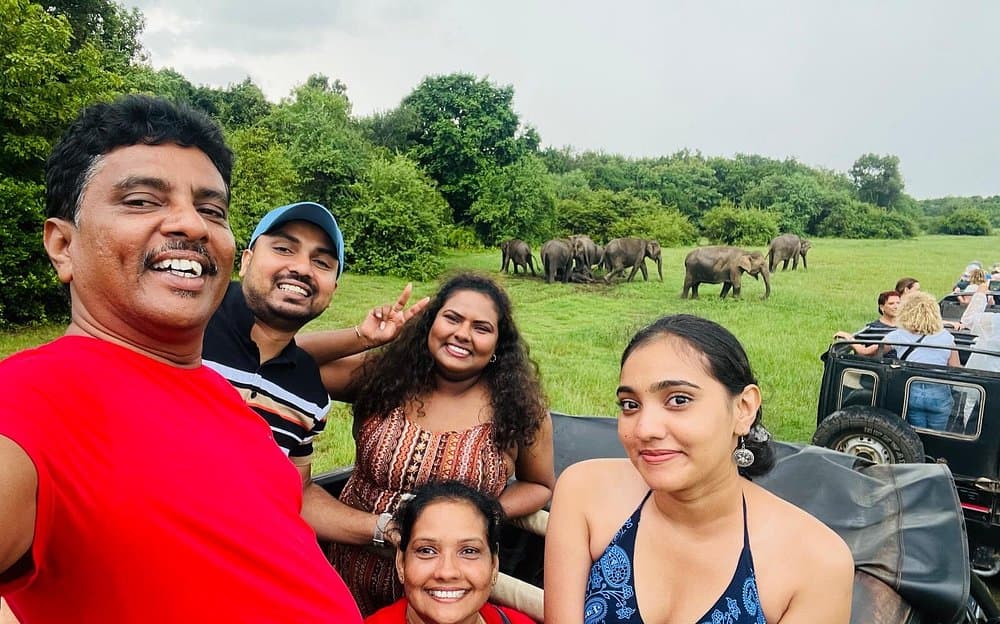
Photo opportunities capturing multiple generations together in safari settings become treasured family heirlooms. Request safari guide assistance getting photos of the entire family together, capture candid moments of grandparents with grandchildren observing elephants, and create formal group photos at significant moments (first elephant sighting, favorite safari viewpoint).
Legacy building through shared experiences strengthens family bonds and creates stories retold for decades. These multigenerational adventures become foundation stories—"Remember when Grandpa saw his first wild elephant at Udawalawe?"—that connect family members across time and geography.

Final Thoughts: Creating Magical Family Safari Memories
A family-friendly Udawalawe safari represents far more than simply viewing wildlife—it creates shared experiences that bond families, builds children's appreciation for the natural world, teaches conservation values, and generates memories that persist throughout lifetimes. The sight of your child's face lighting up at their first elephant encounter, the shared excitement when a baby elephant plays in the water, the quiet moments of wonder as a massive herd crosses the landscape before you—these experiences create emotional connections to wildlife and nature that no book or video can replicate.
The practical challenges of family safari travel—managing young children's bathroom needs, entertaining teenagers during quiet periods, accommodating grandparents' mobility limitations—pale beside the profound rewards of experiencing Udawalawe's elephants together as a family. Children who witness elephant families caring for their young develop empathy and understanding of maternal bonds across species. Teenagers who photograph elephants against dramatic sunsets discover beauty and develop creative skills. Grandparents who share wildlife experiences with grandchildren build legacy memories that connect generations.
Udawalawe's reliability in delivering excellent elephant encounters regardless of visit timing, its comfortable safari duration suited to children's attention spans, and its open terrain making wildlife easily visible even for young eyes all combine to create the ideal family safari destination. The park offers enough wildlife abundance to satisfy serious wildlife enthusiasts while remaining accessible enough for families with toddlers. It provides educational depth for curious school-age children while offering the simple visual spectacle that entertains even the youngest family members.
Approach your family Udawalawe safari with appropriate preparation—packing thoughtfully, setting realistic expectations, planning age-appropriate activities—but also with openness to spontaneous magic. The most treasured safari memories often arise from unexpected moments: the time your four-year-old perfectly mimicked an elephant's trunk movements, when your teenager laughed at a baby elephant's clumsy antics and forgot to be too cool for family activities, or when three generations watched the sunset together as elephants gathered at the reservoir.
These are the moments that transform family safaris from vacation activities into formative experiences shaping how children see the world and their place in it. Plan thoughtfully, prepare adequately, then embrace the adventure with your family knowing that Udawalawe's elephants await to create magic that will resonate through your family stories for generations to come.